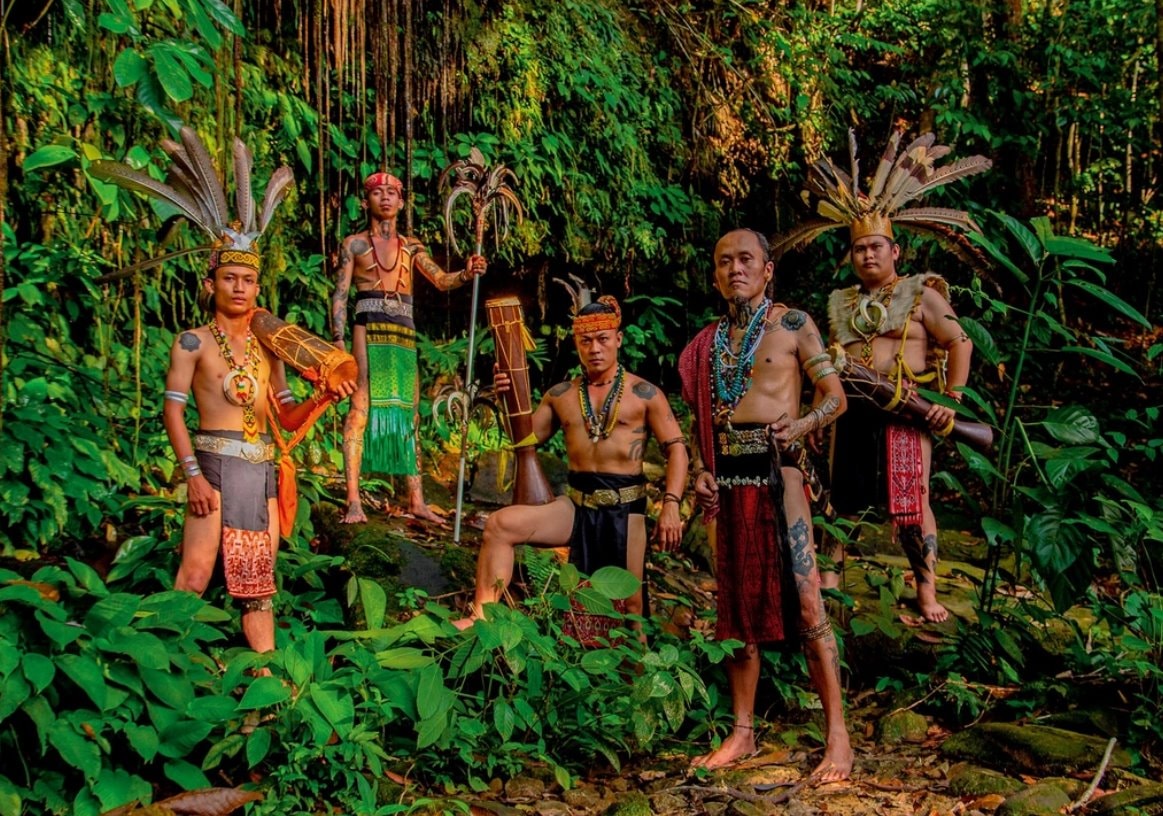
our bandmates in Suku Menoa are connected through Sarawak’s Iban tribe. If there’s one thing that will truly bond the members of a band, it’s shared ancestry.

The Spirit in the Soil: 4 Surprising Lessons from Indonesia’s Sacred Forests

April 17, 2026

In the modern Western imagination, conservation is typically defined by the "nature preserve"—a pristine, fenced-off wilderness where human presence is restricted to the role of a fleeting observer. We treat biodiversity as something to be "protected" from people. Yet, deep within the rainforests of Indonesia, communities like the Baduy of Banten and the Iban of West Kalimantan have maintained vibrant, species-rich ecosystems for centuries by doing the exact opposite: they live within them, managing the land through a complex choreography of the sacred. To a casual visitor, their customs might look like mere folklore. However, as an environmental ethnobotanist, I see these rituals as a "clandestine technology." They are manifestations of Traditional Ecological Knowledge (TEK)—a cumulative body of insight and belief that often outshines modern science in preserving biodiversity. By looking past the "spirit" and into the "soil," we find that ancient rituals are actually sophisticated management plans. Here are four surprising lessons from Indonesia’s sacred forests that challenge our understanding of conservation.

Explore the Blog Post

Sacred Rituals

vector

Editorial Team

April 17, 2026

In the modern Western imagination, conservation is typically defined by the "nature preserve"—a pristine, fenced-off wilderness where human presence is restricted to the role of a fleeting observer. We treat biodiversity as something to be "protected" from people. Yet, deep within the rainforests of Indonesia, communities like the Baduy of Banten and the Iban of West Kalimantan have maintained vibrant, species-rich ecosystems for centuries by doing the exact opposite: they live within them, managing the land through a complex choreography of the sacred. To a casual visitor, their customs might look like mere folklore. However, as an environmental ethnobotanist, I see these rituals as a "clandestine technology." They are manifestations of Traditional Ecological Knowledge (TEK)—a cumulative body of insight and belief that often outshines modern science in preserving biodiversity. By looking past the "spirit" and into the "soil," we find that ancient rituals are actually sophisticated management plans. Here are four surprising lessons from Indonesia’s sacred forests that challenge our understanding of conservation.

1. Ritual as Rational Technology


To the Baduy community, rice cultivation is not merely agriculture; it is a cosmic event. They believe that during the sowing of seeds, the goddess of rice, Nyi Pohaci Sanghyang Asri, becomes "engaged" to the earth, Pertiwi.


"Baduy believe that in sowing rice Nyi Pohaci Sanghyang Asri becomes engaged to the earth, Pertiwi."


This "engagement" (sowing) marks the most biologically vulnerable stage of the crop. To protect the goddess, the community must "entertain" her with specific offerings and "toys" (cocoan), such as the seeds of picung (Pangium edule) and muncang (Aleurites moluccanus). While this appears purely religious, it functions as a biochemical shield.


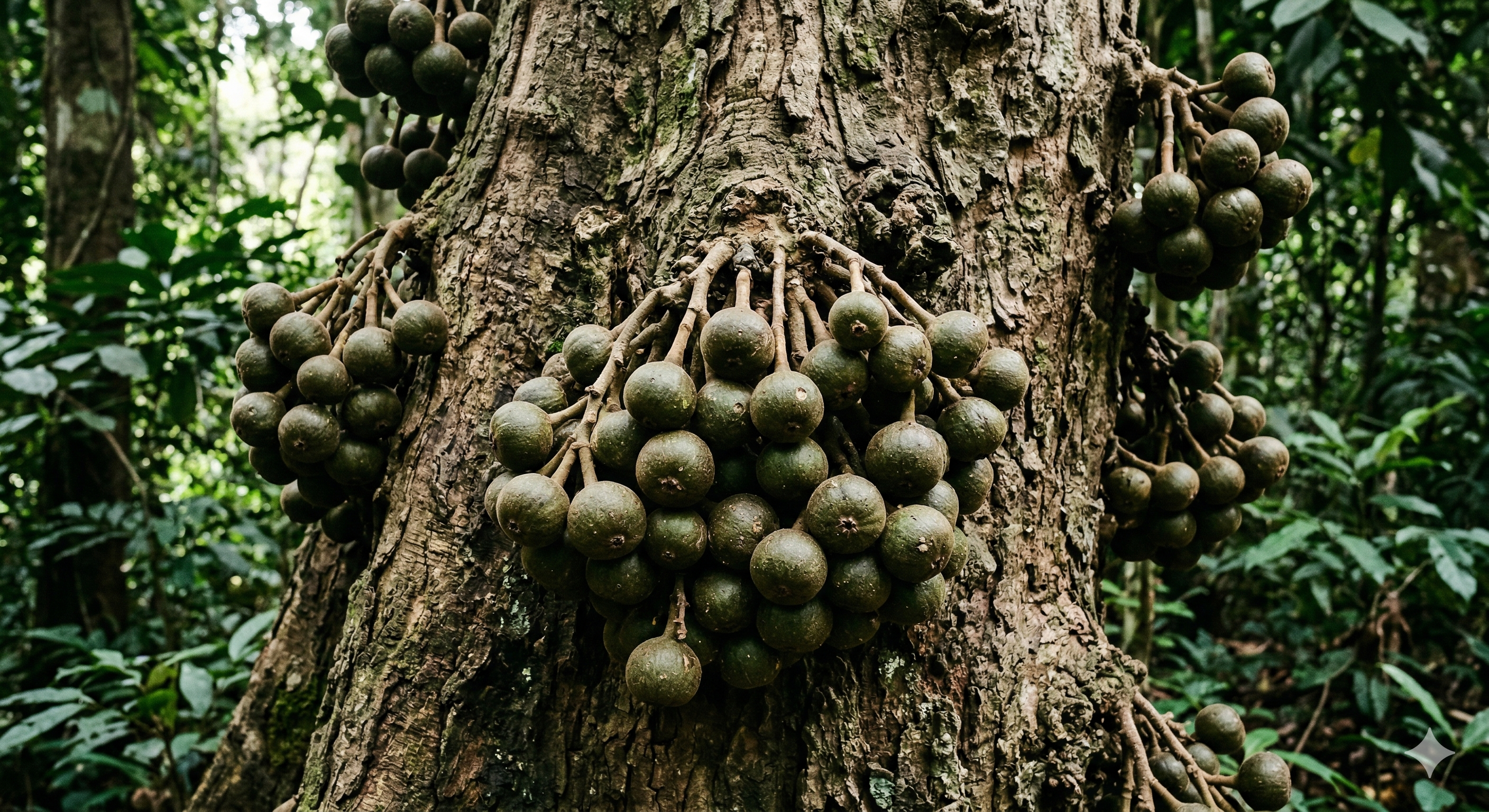
When storing rice in barns (leuit), the Baduy burn incense made from gaharu (Gonystylus macrophyllus) and the root of Jambaka (Dianella nemorosa), alongside the dried peel of pisitan (Lansium domesticum).


Beneath the aromatic smoke lies rigorous science: pisitan peel contains a triterpenoid known as lansioside D, a potent antimicrobial and insecticidal compound. By "entertaining" the goddess with these specific botanical agents, the Baduy apply high-level pesticides that allow rice to be stored safely for decades. What looks like a religious offering is, in fact, rational biochemistry.
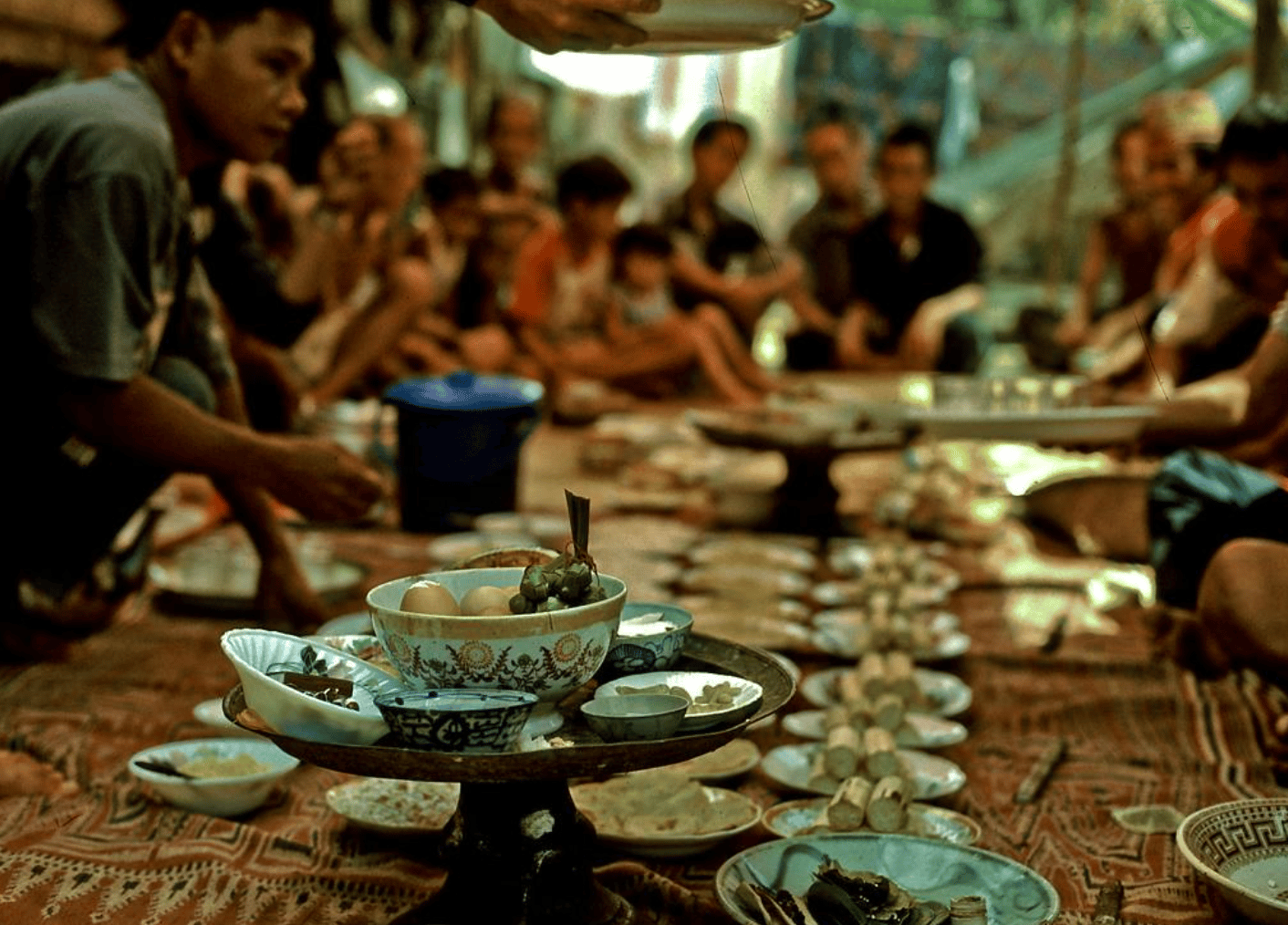
Gawai Iban Rice Rendai offerings
A Dayak Iban member in lake Sentarum weaving a bemban-mat on in her communal homes a.k.a. Rumah Betang.
Photo by
Editorial Team

2. The "Breath of the Land": Spiritual Hydrology


In the headwaters of West Kalimantan, the Iban people monitor their watershed through a concept known as seput menoa—the "breath of the land." For the Iban, the forest is a living respiratory system, and mountain-top forests are its most vital organs.


The Iban use a spiritual metaphor of "heat" (angat) to describe ecological degradation. When forests on mountain peaks are cleared, the land enters a spiritual state of angat. This isn't just a religious label; it is a diagnostic tool. This "heat" manifests physically as the literal drying up of streams and the failure of the local microclimate.


By interdicting these mountain-top forests as sacred, the Iban maintain a "spiritual thermometer" that is far more intuitive and immediate than modern hydrological sensors. Their "cooling" rituals and taboos against felling trees in these zones ensure the physical maintenance of the territory's water levels, proving that spiritual interdiction can be a primary driver of hydrological health.
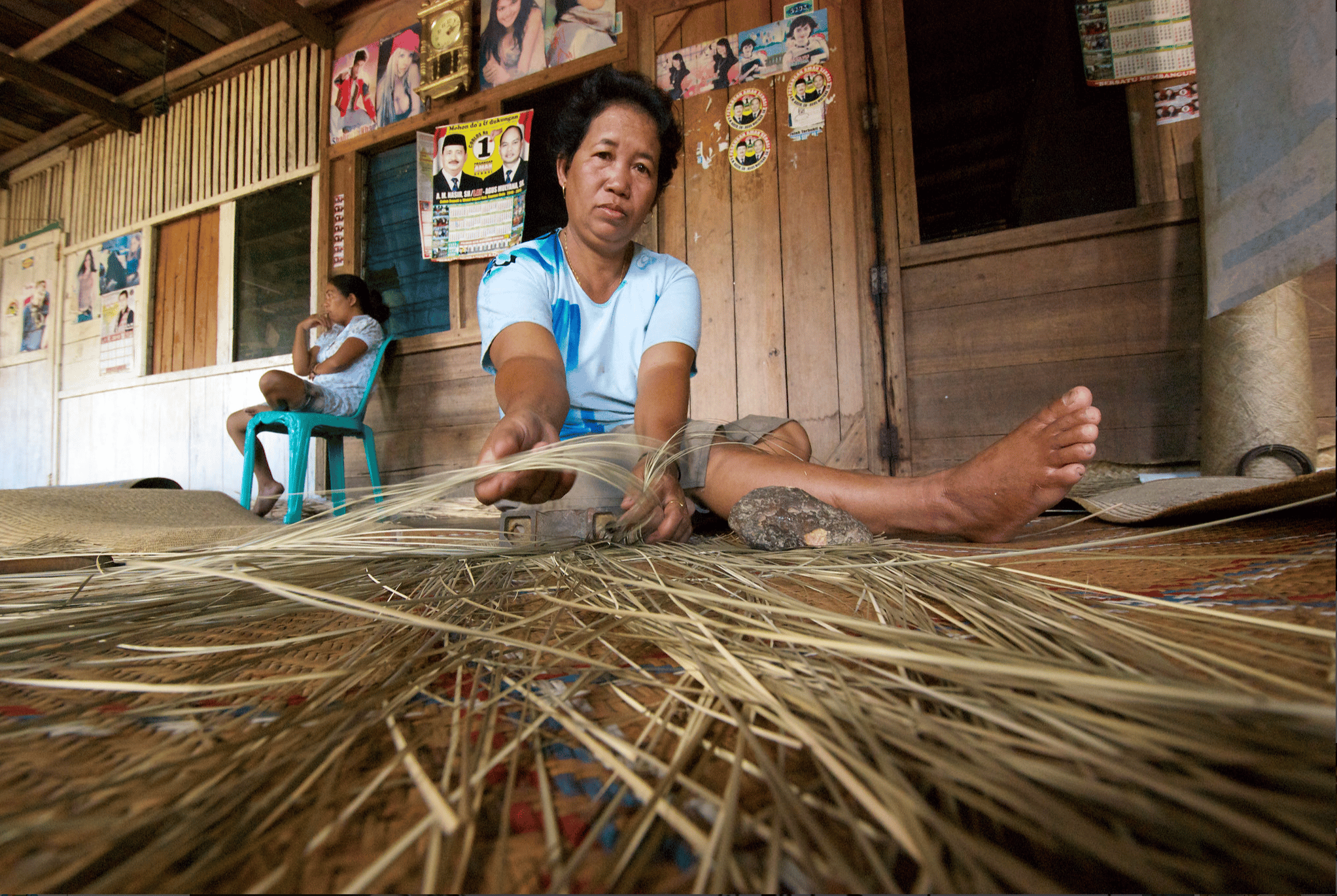

Dayak Iban member in lake Sentarum weaving a bemban-mat

A Dayak Iban member in lake Sentarum weaving a bemban-mat on in her communal homes a.k.a. Rumah Betang.

Photo by
Editorial Team

3. Wildlife as the Original Reforesters


Modern conservation often views hunting as a purely extractive threat. The Iban, however, possess a profound understanding of "forest-animal interactions," viewing wildlife not just as game, but as the original planters of the forest.

The Iban explicitly recognize that a forest cannot sustain itself through wind alone. As one elder explained:


"The trees in old growth forest did not grow on their own (ngai tumboh dire’), but had to be brought by mammals or birds or the wind."


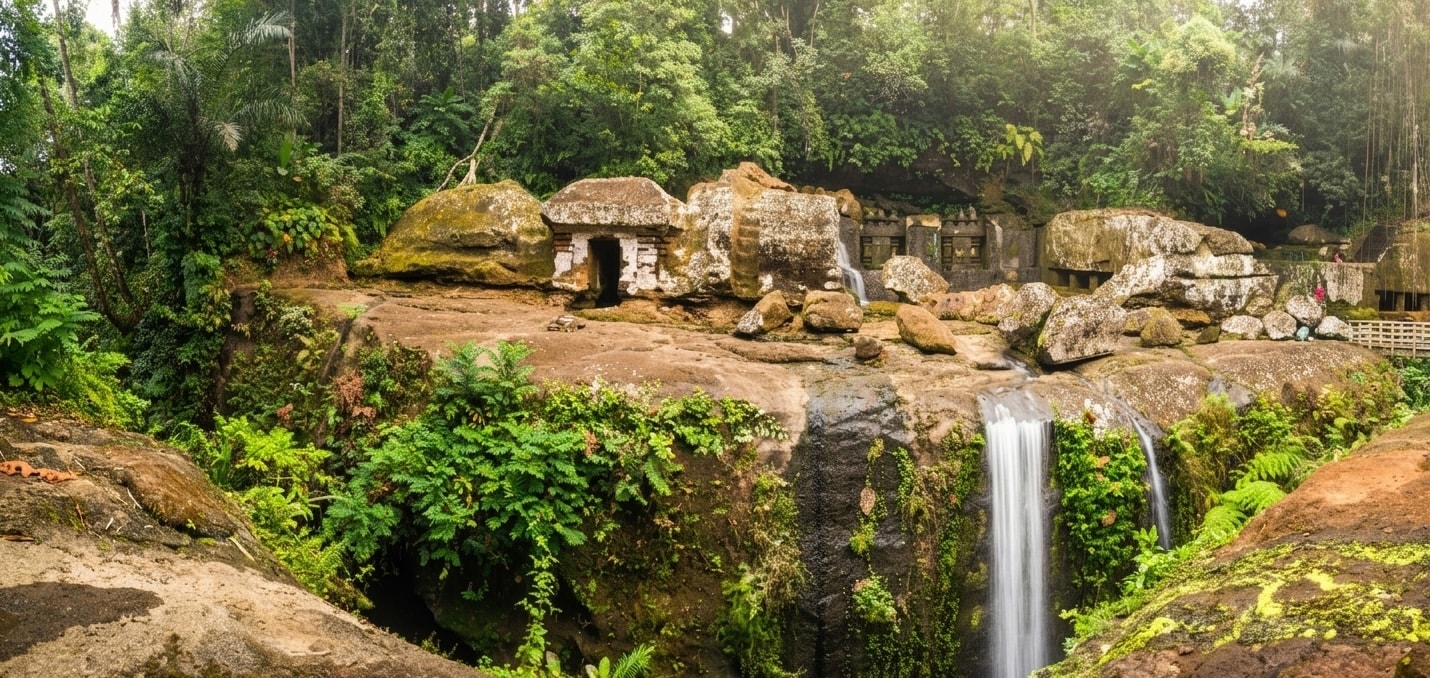
To support these "planters," the Iban maintain sacred groves known as pulau. These are not just religious sites; they are permanent biological refuges.

These groves are rich in Lithocarpus (oaks and chestnuts) and Ficus (figs), species that attract a wide array of seed-dispersers, including primates, hornbills, and bats. By protecting these animals within the pulau, the Iban ensure a natural "delivery service" of seeds to surrounding fallow lands, allowing the forest to regenerate rapidly after cultivation.
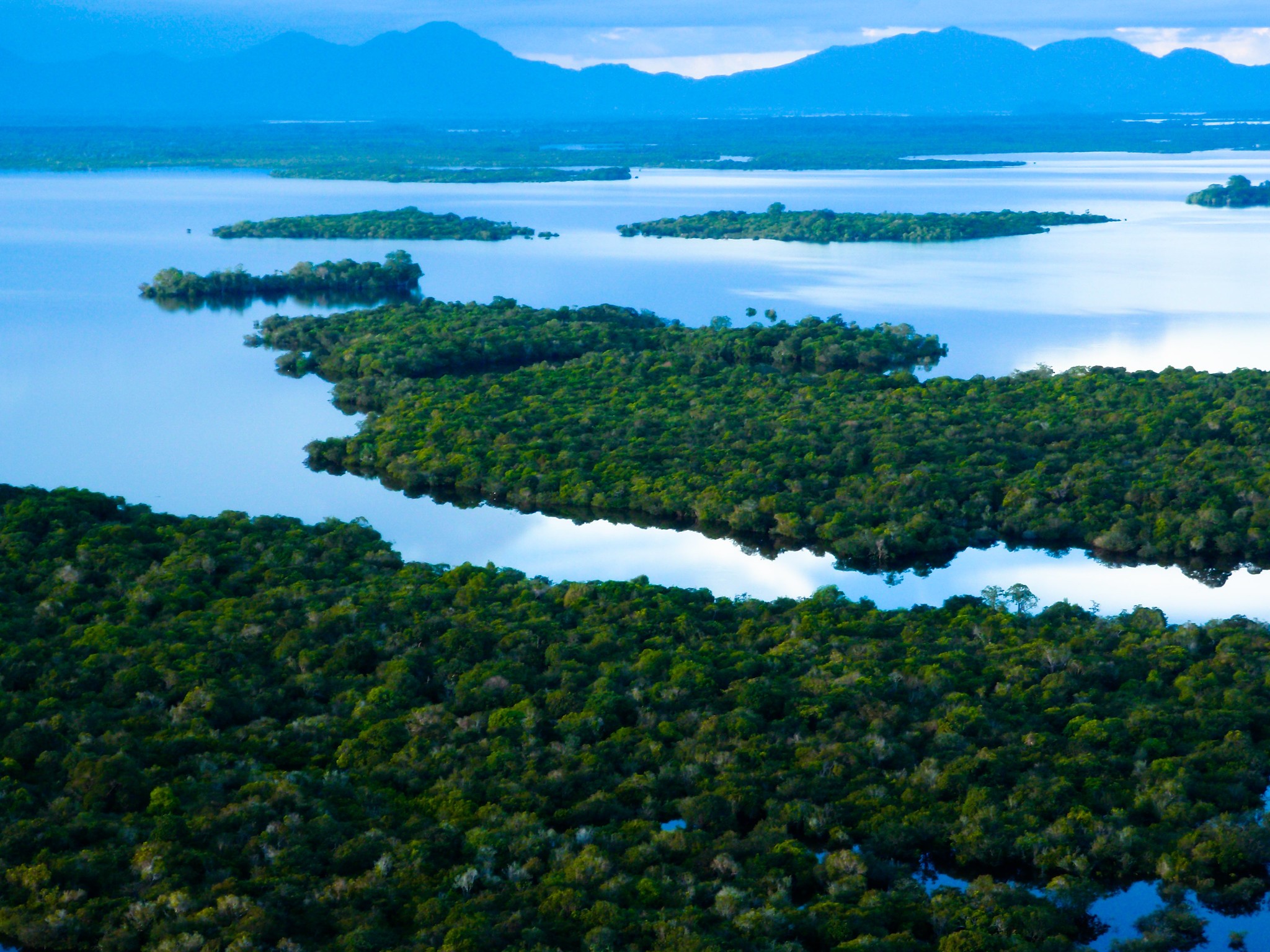
A view of swamp forests in Danau Sentarum National Park view
A view of swamp forests in Danau Sentarum National Park, Tekenang hill, Kapuas Hulu, West Kalimantan, Indonesia.
Photo by
Editorial Team

4. The Paradox of the "Paper Park"


The most startling lesson from regions like Danau Sentarum National Park (DSNP) is that formal, government-sanctioned protection is often an illusion. Researchers have found that while National Parks frequently exist only as "paper parks"—designated on maps but lacking effective management—indigenous sacred sites remain the only functional protection on the ground.

However, these ancient systems are facing a crisis of "de-sanctification." The shift in cultural and religious values is leading to tangible habitat loss:


  • The Burial Shift: Traditionally, the Iban buried their dead in pendam (forested cemeteries) that were strictly protected from felling. Following conversions to Christianity, many have moved toward kubur kristen (new cemeteries) that are kept cleared of all trees and undergrowth, directly reducing forest cover.


  • The Erosion of TEK: National school systems often devalue Traditional Ecological Knowledge, leading a younger generation to view sacred sites as "unscientific" relics.


  • Economic Pressure: The expansion of roads and the lure of "legal and illegal logging" put immense pressure on communities to convert sacred groves into cash-crop plantations.


The data from DSNP suggests that the most effective way to save Indonesian biodiversity is not to "fence it off" from the people, but to support the cultural and ritual frameworks that have managed it for generations.

A Path for the Future


The "spirit in the soil" is not a myth; it is a management plan. To move forward, we must stop viewing Western conservation science and Indigenous "cosmos" as contradictory. True resilience lies in integration.


We must move toward a conservation model that includes monetary compensation for communities that maintain their sacred forests and direct support for existing indigenous management structures rather than replacing them with ineffective bureaucracies.


If we viewed our own local environments as possessing "breath," or if we saw the timing of our consumption as an "engagement" with the earth's limited resources, how would our habits change? Perhaps it is time we remembered the wisdom we forgot: that the most sophisticated technology for saving the planet may be the very rituals we once dismissed as superstition.
POST

POST
POST

brand

© 2021 - 2026 | Asian Heritage Silva : All rights reserved. a Website Created by matinee.icu

our bandmates in Suku Menoa are connected through Sarawak’s Iban tribe. If there’s one thing that will truly bond the members of a band, it’s shared ancestry.

The Spirit in the Soil: 4 Surprising Lessons from Indonesia’s Sacred Forests

April 17, 2026

In the modern Western imagination, conservation is typically defined by the "nature preserve"—a pristine, fenced-off wilderness where human presence is restricted to the role of a fleeting observer. We treat biodiversity as something to be "protected" from people. Yet, deep within the rainforests of Indonesia, communities like the Baduy of Banten and the Iban of West Kalimantan have maintained vibrant, species-rich ecosystems for centuries by doing the exact opposite: they live within them, managing the land through a complex choreography of the sacred. To a casual visitor, their customs might look like mere folklore. However, as an environmental ethnobotanist, I see these rituals as a "clandestine technology." They are manifestations of Traditional Ecological Knowledge (TEK)—a cumulative body of insight and belief that often outshines modern science in preserving biodiversity. By looking past the "spirit" and into the "soil," we find that ancient rituals are actually sophisticated management plans. Here are four surprising lessons from Indonesia’s sacred forests that challenge our understanding of conservation.

Explore the Blog Post

Sacred Rituals

vector

April 17, 2026

Editorial Team

In the modern Western imagination, conservation is typically defined by the "nature preserve"—a pristine, fenced-off wilderness where human presence is restricted to the role of a fleeting observer. We treat biodiversity as something to be "protected" from people. Yet, deep within the rainforests of Indonesia, communities like the Baduy of Banten and the Iban of West Kalimantan have maintained vibrant, species-rich ecosystems for centuries by doing the exact opposite: they live within them, managing the land through a complex choreography of the sacred. To a casual visitor, their customs might look like mere folklore. However, as an environmental ethnobotanist, I see these rituals as a "clandestine technology." They are manifestations of Traditional Ecological Knowledge (TEK)—a cumulative body of insight and belief that often outshines modern science in preserving biodiversity. By looking past the "spirit" and into the "soil," we find that ancient rituals are actually sophisticated management plans. Here are four surprising lessons from Indonesia’s sacred forests that challenge our understanding of conservation.

1. Ritual as Rational Technology


To the Baduy community, rice cultivation is not merely agriculture; it is a cosmic event. They believe that during the sowing of seeds, the goddess of rice, Nyi Pohaci Sanghyang Asri, becomes "engaged" to the earth, Pertiwi.


"Baduy believe that in sowing rice Nyi Pohaci Sanghyang Asri becomes engaged to the earth, Pertiwi."


This "engagement" (sowing) marks the most biologically vulnerable stage of the crop. To protect the goddess, the community must "entertain" her with specific offerings and "toys" (cocoan), such as the seeds of picung (Pangium edule) and muncang (Aleurites moluccanus). While this appears purely religious, it functions as a biochemical shield.


When storing rice in barns (leuit), the Baduy burn incense made from gaharu (Gonystylus macrophyllus) and the root of Jambaka (Dianella nemorosa), alongside the dried peel of pisitan (Lansium domesticum).


Beneath the aromatic smoke lies rigorous science: pisitan peel contains a triterpenoid known as lansioside D, a potent antimicrobial and insecticidal compound. By "entertaining" the goddess with these specific botanical agents, the Baduy apply high-level pesticides that allow rice to be stored safely for decades. What looks like a religious offering is, in fact, rational biochemistry.

Gawai Iban Rice Rendai offerings
A Dayak Iban member in lake Sentarum weaving a bemban-mat on in her communal homes a.k.a. Rumah Betang.
Photo by
Editorial Team

2. The "Breath of the Land": Spiritual Hydrology


In the headwaters of West Kalimantan, the Iban people monitor their watershed through a concept known as seput menoa—the "breath of the land." For the Iban, the forest is a living respiratory system, and mountain-top forests are its most vital organs.


The Iban use a spiritual metaphor of "heat" (angat) to describe ecological degradation. When forests on mountain peaks are cleared, the land enters a spiritual state of angat. This isn't just a religious label; it is a diagnostic tool. This "heat" manifests physically as the literal drying up of streams and the failure of the local microclimate.


By interdicting these mountain-top forests as sacred, the Iban maintain a "spiritual thermometer" that is far more intuitive and immediate than modern hydrological sensors. Their "cooling" rituals and taboos against felling trees in these zones ensure the physical maintenance of the territory's water levels, proving that spiritual interdiction can be a primary driver of hydrological health.


Dayak Iban member in lake Sentarum weaving a bemban-mat

A Dayak Iban member in lake Sentarum weaving a bemban-mat on in her communal homes a.k.a. Rumah Betang.

Photo by
Editorial Team

3. Wildlife as the Original Reforesters


Modern conservation often views hunting as a purely extractive threat. The Iban, however, possess a profound understanding of "forest-animal interactions," viewing wildlife not just as game, but as the original planters of the forest.

The Iban explicitly recognize that a forest cannot sustain itself through wind alone. As one elder explained:


"The trees in old growth forest did not grow on their own (ngai tumboh dire’), but had to be brought by mammals or birds or the wind."


To support these "planters," the Iban maintain sacred groves known as pulau. These are not just religious sites; they are permanent biological refuges.

These groves are rich in Lithocarpus (oaks and chestnuts) and Ficus (figs), species that attract a wide array of seed-dispersers, including primates, hornbills, and bats. By protecting these animals within the pulau, the Iban ensure a natural "delivery service" of seeds to surrounding fallow lands, allowing the forest to regenerate rapidly after cultivation.

A view of swamp forests in Danau Sentarum National Park view
A view of swamp forests in Danau Sentarum National Park, Tekenang hill, Kapuas Hulu, West Kalimantan, Indonesia.
Photo by
Editorial Team

4. The Paradox of the "Paper Park"


The most startling lesson from regions like Danau Sentarum National Park (DSNP) is that formal, government-sanctioned protection is often an illusion. Researchers have found that while National Parks frequently exist only as "paper parks"—designated on maps but lacking effective management—indigenous sacred sites remain the only functional protection on the ground.

However, these ancient systems are facing a crisis of "de-sanctification." The shift in cultural and religious values is leading to tangible habitat loss:


  • The Burial Shift: Traditionally, the Iban buried their dead in pendam (forested cemeteries) that were strictly protected from felling. Following conversions to Christianity, many have moved toward kubur kristen (new cemeteries) that are kept cleared of all trees and undergrowth, directly reducing forest cover.


  • The Erosion of TEK: National school systems often devalue Traditional Ecological Knowledge, leading a younger generation to view sacred sites as "unscientific" relics.


  • Economic Pressure: The expansion of roads and the lure of "legal and illegal logging" put immense pressure on communities to convert sacred groves into cash-crop plantations.


The data from DSNP suggests that the most effective way to save Indonesian biodiversity is not to "fence it off" from the people, but to support the cultural and ritual frameworks that have managed it for generations.

A Path for the Future


The "spirit in the soil" is not a myth; it is a management plan. To move forward, we must stop viewing Western conservation science and Indigenous "cosmos" as contradictory. True resilience lies in integration.


We must move toward a conservation model that includes monetary compensation for communities that maintain their sacred forests and direct support for existing indigenous management structures rather than replacing them with ineffective bureaucracies.


If we viewed our own local environments as possessing "breath," or if we saw the timing of our consumption as an "engagement" with the earth's limited resources, how would our habits change? Perhaps it is time we remembered the wisdom we forgot: that the most sophisticated technology for saving the planet may be the very rituals we once dismissed as superstition.

vector
vector
vector
vector
vector
vector
vector
vector
vector
vector
vector
vector
vector
vector
vector
vector
vector
vector
vector
vector
vector
vector
vector
vector
vector
vector
vector
vector
vector
vector
vector
vector
vector
vector
vector
vector
vector
vector
vector
vector
vector
vector
vector
vector
vector
vector
vector
vector
vector
vector
vector
vector
vector
vector
vector
vector
vector
vector
vector
vector

Donate Today

Support the costs of the project to keep it alive

DONATE

Explore More

About The Map Project

Learn Map Builder

Help Through GFW

Privacy Policy

About

Our Vision

Contact Us

CONNECT

vector
vector
vector
vector
brand

© 2021 - 2026 | Asian Heritage Silva : All rights reserved. a Website Created by matinee.icu

our bandmates in Suku Menoa are connected through Sarawak’s Iban tribe. If there’s one thing that will truly bond the members of a band, it’s shared ancestry.

The Spirit in the Soil: 4 Surprising Lessons from Indonesia’s Sacred Forests

April 17, 2026

In the modern Western imagination, conservation is typically defined by the "nature preserve"—a pristine, fenced-off wilderness where human presence is restricted to the role of a fleeting observer. We treat biodiversity as something to be "protected" from people. Yet, deep within the rainforests of Indonesia, communities like the Baduy of Banten and the Iban of West Kalimantan have maintained vibrant, species-rich ecosystems for centuries by doing the exact opposite: they live within them, managing the land through a complex choreography of the sacred. To a casual visitor, their customs might look like mere folklore. However, as an environmental ethnobotanist, I see these rituals as a "clandestine technology." They are manifestations of Traditional Ecological Knowledge (TEK)—a cumulative body of insight and belief that often outshines modern science in preserving biodiversity. By looking past the "spirit" and into the "soil," we find that ancient rituals are actually sophisticated management plans. Here are four surprising lessons from Indonesia’s sacred forests that challenge our understanding of conservation.

Explore the Blog Post

Sacred Rituals

vector
Editorial Team

April 17, 2026

In the modern Western imagination, conservation is typically defined by the "nature preserve"—a pristine, fenced-off wilderness where human presence is restricted to the role of a fleeting observer. We treat biodiversity as something to be "protected" from people. Yet, deep within the rainforests of Indonesia, communities like the Baduy of Banten and the Iban of West Kalimantan have maintained vibrant, species-rich ecosystems for centuries by doing the exact opposite: they live within them, managing the land through a complex choreography of the sacred. To a casual visitor, their customs might look like mere folklore. However, as an environmental ethnobotanist, I see these rituals as a "clandestine technology." They are manifestations of Traditional Ecological Knowledge (TEK)—a cumulative body of insight and belief that often outshines modern science in preserving biodiversity. By looking past the "spirit" and into the "soil," we find that ancient rituals are actually sophisticated management plans. Here are four surprising lessons from Indonesia’s sacred forests that challenge our understanding of conservation.

1. Ritual as Rational Technology


To the Baduy community, rice cultivation is not merely agriculture; it is a cosmic event. They believe that during the sowing of seeds, the goddess of rice, Nyi Pohaci Sanghyang Asri, becomes "engaged" to the earth, Pertiwi.


"Baduy believe that in sowing rice Nyi Pohaci Sanghyang Asri becomes engaged to the earth, Pertiwi."


This "engagement" (sowing) marks the most biologically vulnerable stage of the crop. To protect the goddess, the community must "entertain" her with specific offerings and "toys" (cocoan), such as the seeds of picung (Pangium edule) and muncang (Aleurites moluccanus). While this appears purely religious, it functions as a biochemical shield.


When storing rice in barns (leuit), the Baduy burn incense made from gaharu (Gonystylus macrophyllus) and the root of Jambaka (Dianella nemorosa), alongside the dried peel of pisitan (Lansium domesticum).


Beneath the aromatic smoke lies rigorous science: pisitan peel contains a triterpenoid known as lansioside D, a potent antimicrobial and insecticidal compound. By "entertaining" the goddess with these specific botanical agents, the Baduy apply high-level pesticides that allow rice to be stored safely for decades. What looks like a religious offering is, in fact, rational biochemistry.

Gawai Iban Rice Rendai offerings
A Dayak Iban member in lake Sentarum weaving a bemban-mat on in her communal homes a.k.a. Rumah Betang.
Photo by
Editorial Team

2. The "Breath of the Land": Spiritual Hydrology


In the headwaters of West Kalimantan, the Iban people monitor their watershed through a concept known as seput menoa—the "breath of the land." For the Iban, the forest is a living respiratory system, and mountain-top forests are its most vital organs.


The Iban use a spiritual metaphor of "heat" (angat) to describe ecological degradation. When forests on mountain peaks are cleared, the land enters a spiritual state of angat. This isn't just a religious label; it is a diagnostic tool. This "heat" manifests physically as the literal drying up of streams and the failure of the local microclimate.


By interdicting these mountain-top forests as sacred, the Iban maintain a "spiritual thermometer" that is far more intuitive and immediate than modern hydrological sensors. Their "cooling" rituals and taboos against felling trees in these zones ensure the physical maintenance of the territory's water levels, proving that spiritual interdiction can be a primary driver of hydrological health.


Dayak Iban member in lake Sentarum weaving a bemban-mat
A Dayak Iban member in lake Sentarum weaving a bemban-mat on in her communal homes a.k.a. Rumah Betang.
Photo by
Editorial Team

3. Wildlife as the Original Reforesters


Modern conservation often views hunting as a purely extractive threat. The Iban, however, possess a profound understanding of "forest-animal interactions," viewing wildlife not just as game, but as the original planters of the forest.

The Iban explicitly recognize that a forest cannot sustain itself through wind alone. As one elder explained:


"The trees in old growth forest did not grow on their own (ngai tumboh dire’), but had to be brought by mammals or birds or the wind."


To support these "planters," the Iban maintain sacred groves known as pulau. These are not just religious sites; they are permanent biological refuges.

These groves are rich in Lithocarpus (oaks and chestnuts) and Ficus (figs), species that attract a wide array of seed-dispersers, including primates, hornbills, and bats. By protecting these animals within the pulau, the Iban ensure a natural "delivery service" of seeds to surrounding fallow lands, allowing the forest to regenerate rapidly after cultivation.

A view of swamp forests in Danau Sentarum National Park view
A view of swamp forests in Danau Sentarum National Park, Tekenang hill, Kapuas Hulu, West Kalimantan, Indonesia.
Photo by
Editorial Team

4. The Paradox of the "Paper Park"


The most startling lesson from regions like Danau Sentarum National Park (DSNP) is that formal, government-sanctioned protection is often an illusion. Researchers have found that while National Parks frequently exist only as "paper parks"—designated on maps but lacking effective management—indigenous sacred sites remain the only functional protection on the ground.

However, these ancient systems are facing a crisis of "de-sanctification." The shift in cultural and religious values is leading to tangible habitat loss:


  • The Burial Shift: Traditionally, the Iban buried their dead in pendam (forested cemeteries) that were strictly protected from felling. Following conversions to Christianity, many have moved toward kubur kristen (new cemeteries) that are kept cleared of all trees and undergrowth, directly reducing forest cover.


  • The Erosion of TEK: National school systems often devalue Traditional Ecological Knowledge, leading a younger generation to view sacred sites as "unscientific" relics.


  • Economic Pressure: The expansion of roads and the lure of "legal and illegal logging" put immense pressure on communities to convert sacred groves into cash-crop plantations.


The data from DSNP suggests that the most effective way to save Indonesian biodiversity is not to "fence it off" from the people, but to support the cultural and ritual frameworks that have managed it for generations.

A Path for the Future


The "spirit in the soil" is not a myth; it is a management plan. To move forward, we must stop viewing Western conservation science and Indigenous "cosmos" as contradictory. True resilience lies in integration.


We must move toward a conservation model that includes monetary compensation for communities that maintain their sacred forests and direct support for existing indigenous management structures rather than replacing them with ineffective bureaucracies.


If we viewed our own local environments as possessing "breath," or if we saw the timing of our consumption as an "engagement" with the earth's limited resources, how would our habits change? Perhaps it is time we remembered the wisdom we forgot: that the most sophisticated technology for saving the planet may be the very rituals we once dismissed as superstition.

brand

© 2021 - 2026 | Asian Heritage Silva : All rights reserved. | A Website Created by matinee.icu