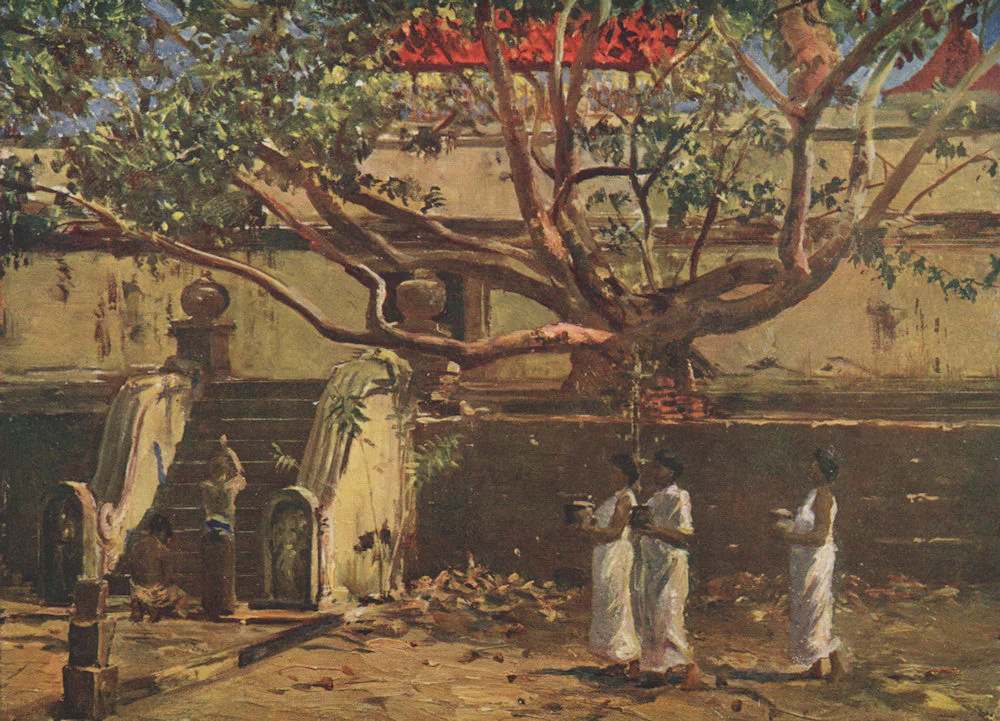
A Sacred Bo-tree" by Allan Stewart, Sri Lanka 1913. Old antique print picture depicting devotees in white robes walking beneath the sprawling branches of a large Bodhi tree near ancient stone temple steps

The Project

Preserving the Past, Sustaining the Future: Protecting Sacred Trees in Monsoon Asia.

By advocating for the preservation of these sacred trees, we seek to endorse sustainable development and foster a more harmonious human-nature relationship.

READ MORE

divider
divider
divider
ABOUT THE PROJECT.

Exploring the Profound Cultural and Ecological Significance of Sacred Trees.

Uncover the cultural and environmental significance of sacred trees in Monsoon Asia through crowdsource initiatives, interactive mapping, and experiential education.

Raise awareness about sacred trees in Monsoon Asia with an interactive data map. Targeting locals, tourists, scholars, and policymakers, the platform promotes the preservation of these trees for cultural, religious, and ecological reasons. The web tool serves researchers, environmentalists, and conservationists by centralizing information, aiding in identifying key preservation areas. Additionally, it supports sharing successful conservation efforts and fostering collaborative initiatives.

decoration
Mission

Four Key Actions for the Preservation of Sacred Trees as Vital Elements of Monsoon Asia's Natural and Cultural Heritage

Raise Awareness:

Increase public knowledge and understanding of the cultural and ecological significance of sacred trees through education and awareness campaigns. Collaborate with local communities, schools, and media to promote conservation efforts.

Develop Sustainable Practices:

Encourage sustainable management practices that protect sacred trees and their associated ecosystems. Promote responsible tourism and ensure that development plans are designed to minimize the impact on sacred trees.

Establish Protected Areas:

Designate protected areas for sacred trees and associated ecosystems to ensure their long-term survival. Collaborate with local communities and governments to establish effective management plans for these areas.

Support Research:

Support research initiatives aimed at understanding the ecology and cultural significance of sacred trees. Encourage collaborations between researchers, local communities, and NGOs to facilitate the exchange of knowledge and promote effective conservation strategies.

“Unlike a botanical garden, where a wide range of trees and plants are collected and cultivated for the purpose of our education and enjoyment, the sacred groves are one method of expressing the gratitude of human beings to the trees which sustain and support life under a given agro-ecological condition”.

Dr. M.S. Swaminathan.

APPROACH

How to Approach

In order to protect Monsoon Asia's esteemed woodlands, we utilize a multi-faceted strategy. This involves cultivating knowledge via teaching and public consciousness movements, advocating for eco-friendly preservation practices, setting up safeguarded zones, and bolstering exploratory ventures.

Indonesia

A Case Study of Mount Rinjani National Park.

Designating Protected Areas for Sacred Trees.

Laos

A Case Study of Luang Prabang Province.

Raising Awareness through Education and Media.

malaysia

A Case Study of the Borneo Rainforest.

Collaborating with Local Communities to Establish Effective Management Plans.

With the current rate of deforestation, the world’s rainforests will be gone by 2100. The rainforest is home to more than half of all species on Earth.

Percent of wild forests left undefined, right now

sources

IMPACT

How to Impact

The impact would be the conservation and preservation of sacred trees in Southeast Asia, which are of great cultural and ecological significance. This would lead to the protection of associated ecosystems and the promotion of sustainable management practices.

Angkor | CAMBODIA

Raising awareness among tourists and locals, promoting sustainable tourism practices, and establishing a protected area for the banyan trees in the Angkor Wat temple complex.

163 ha

South Sulawesi | ID

Collaborating with the indigenous community of Tana Toraja, promoting traditional forest management practices, and supporting research initiatives to understand the cultural significance of the sacred grove.

793.17 sq mi

Bihar | INDIA

Establishing a protected area for the Bodhi trees, working with the government and local communities to promote sustainable management practices, and supporting research initiatives.

7.8 sq mi

Siem Reap | KR

Collaborating with the government, local communities, and archaeologists to promote sustainable management practices and protect the iconic Banyan trees of Ta Prohm temple.

650.000 sq. m.

Chiang Mai | TH

Raising awareness among tourists and locals, collaborating with the government and local communities to establish protected areas, promoting sustainable management practices, and supporting research initiatives.

40,22 km²

Partners

brand

© 2021 - 2025 | Asian Heritage Silva : All rights reserved. a Website Created by matinee.icu

A Sacred Bo-tree" by Allan Stewart, Sri Lanka 1913. Old antique print picture depicting devotees in white robes walking beneath the sprawling branches of a large Bodhi tree near ancient stone temple steps

The Project

Preserving the Past, Sustaining the Future: Protecting Sacred Trees in Monsoon Asia.

By advocating for the preservation of these sacred trees, we seek to endorse sustainable development and foster a more harmonious human-nature relationship.

READ MORE

divider
ABOUT THE PROJECT.

Exploring the Profound Cultural and Ecological Significance of Sacred Trees.

Uncover the cultural and environmental significance of sacred trees in Monsoon Asia through crowdsource initiatives, interactive mapping, and experiential education.

Raise awareness about sacred trees in Monsoon Asia with an interactive data map. Targeting locals, tourists, scholars, and policymakers, the platform promotes the preservation of these trees for cultural, religious, and ecological reasons.


The web tool serves researchers, environmentalists, and conservationists by centralizing information, aiding in identifying key preservation areas. Additionally, it supports sharing successful conservation efforts and fostering collaborative initiatives.

Mission

Four Key Actions for the Preservation of Sacred Trees as Vital Elements of Monsoon Asia's Natural and Cultural Heritage

“Unlike a botanical garden, where a wide range of trees and plants are collected and cultivated for the purpose of our education and enjoyment, the sacred groves are one method of expressing the gratitude of human beings to the trees which sustain and support life under a given agro-ecological condition”. Dr. M.S. Swaminathan.

divider
divider
divider
divider
divider

APPROACH

How to Approach

In order to protect Monsoon Asia's esteemed woodlands, we utilize a multi-faceted strategy. This involves cultivating knowledge via teaching and public consciousness movements, advocating for eco-friendly preservation practices, setting up safeguarded zones, and bolstering exploratory ventures.

Indonesia

A Case Study of Mount Rinjani National Park.

Designating Protected Areas for Sacred Trees.

Laos

A Case Study of Luang Prabang Province.

Raising Awareness through Education and Media.

malaysia

A Case Study of the Borneo Rainforest.

Collaborating with Local Communities to Establish Effective Management Plans.

With the current rate of deforestation, the world’s rainforests will be gone by 2100. The Rainforest is home to more than half of all species on Earth. (H4)

Percent of wild forests left undefined, right now

sources

IMPACT

How to Impact

The impact would be the conservation and preservation of sacred trees in Southeast Asia, which are of great cultural and ecological significance. This would lead to the protection of associated ecosystems and the promotion of sustainable management practices.

Angkor | CAMBODIA

Raising awareness among tourists and locals, promoting sustainable tourism practices, and establishing a protected area for the banyan trees in the Angkor Wat temple complex.

163 ha

South Sulawesi | ID

Collaborating with the indigenous community of Tana Toraja, promoting traditional forest management practices, and supporting research initiatives to understand the cultural significance of the sacred grove.

793.17 sq mi

Bihar | INDIA

Establishing a protected area for the Bodhi trees, working with the government and local communities to promote sustainable management practices, and supporting research initiatives.

7.8 sq mi

Siem Reap | KR

Collaborating with the government, local communities, and archaeologists to promote sustainable management practices and protect the iconic Banyan trees of Ta Prohm temple.

650.000 sq. m.

Chiang Mai | TH

Raising awareness among tourists and locals, collaborating with the government and local communities to establish protected areas, promoting sustainable management practices, and supporting research initiatives.

40,22 km²

Partners

Donate Today

Support the costs of the project to keep it alive

DONATE

Explore More

About The Map Project

Learn Map Builder

Help Through GFW

Privacy Policy

About

Our Vision

Contact Us

CONNECT

Facebook Icn
youtube logo
bluesky icon
mastodon icon
brand

© 2021 - 2025 | Asian Heritage Silva : All rights reserved. a Website Created by matinee.icu

A Sacred Bo-tree" by Allan Stewart, Sri Lanka 1913. Old antique print picture depicting devotees in white robes walking beneath the sprawling branches of a large Bodhi tree near ancient stone temple steps

The Project

Preserving the Past, Sustaining the Future: Protecting Sacred Trees in Monsoon Asia.

By advocating for the preservation of these sacred trees, we seek to endorse sustainable development and foster a more harmonious human-nature relationship.

READ MORE

divider
divider
divider
VISION

Preserving the Past, Sustaining the Future: Protecting Sacred Trees in Monsoon Asia.

Maintaining the Cultural and Environmental Importance of Holy Trees through Education and Preservation.

Our vision is to globally acknowledge, respect, and preserve the cultural and ecological significance of sacred trees in Monsoon Asia. Utilizing an interactive data map platform, we aim to raise awareness among diverse stakeholders, including local communities, tourists, scholars, and policymakers.

By advocating for the preservation of these sacred trees, we seek to endorse sustainable development and foster a more harmonious human-nature relationship.

The platform, a valuable tool for researchers and environmentalists, serves as a central repository of information on sacred trees, assisting in identifying areas requiring preservation efforts. Ultimately, our vision is to contribute to conserving Monsoon Asia's natural and cultural heritage, ensuring it endures for future generations to appreciate.

image deco

Mission

Four Key Actions for the Preservation of Sacred Trees as Vital Elements of Monsoon Asia's Natural and Cultural Heritage

“Unlike a botanical garden, where a wide range of trees and plants are collected and cultivated for the purpose of our education and enjoyment, the sacred groves are one method of expressing the gratitude of human beings to the trees which sustain and support life under a given agro-ecological condition”.

Dr. M.S. Swaminathan.

divider
divider
divider
divider
APPROACH

How to Approach

In order to protect Monsoon Asia's esteemed woodlands, we utilize a multi-faceted strategy. This involves cultivating knowledge via teaching and public consciousness movements, advocating for eco-friendly preservation practices, setting up safeguarded zones, and bolstering exploratory ventures.

Indonesia

A Case Study of Mount Rinjani National Park.

Designating Protected Areas for Sacred Trees.

Laos

A Case Study of Luang Prabang Province.

Raising Awareness through Education and Media.

malaysia

A Case Study of the Borneo Rainforest.

Collaborating with Local Communities to Establish Effective Management Plans.

divider

With the current rate of deforestation, the world’s rainforests will be gone by 2100. The

Rainforest is home to more than half of all species on Earth. (H4)

Percent of wild forests left undefined, right now

sources

IMPACT

How to Impact

The impact would be the conservation and preservation of sacred trees in Southeast Asia, which are of great cultural and ecological significance. This would lead to the protection of associated ecosystems and the promotion of sustainable management practices.

Angkor | CAMBODIA

Raising awareness among tourists and locals, promoting sustainable tourism practices, and establishing a protected area for the banyan trees in the Angkor Wat temple complex.

163 ha

South Sulawesi | ID

Collaborating with the indigenous community of Tana Toraja, promoting traditional forest management practices, and supporting research initiatives to understand the cultural significance of the sacred grove.

793.17 sq mi

Bihar | INDIA

Establishing a protected area for the Bodhi trees, working with the government and local communities to promote sustainable management practices, and supporting research initiatives.

7.8 sq mi

Siem Reap | KR

Collaborating with the government, local communities, and archaeologists to promote sustainable management practices and protect the iconic Banyan trees of Ta Prohm temple.

650.000 sq. m.

Chiang Mai | TH

Raising awareness among tourists and locals, collaborating with the government and local communities to establish protected areas, promoting sustainable management practices, and supporting research initiatives.

40,22 km²

Partners