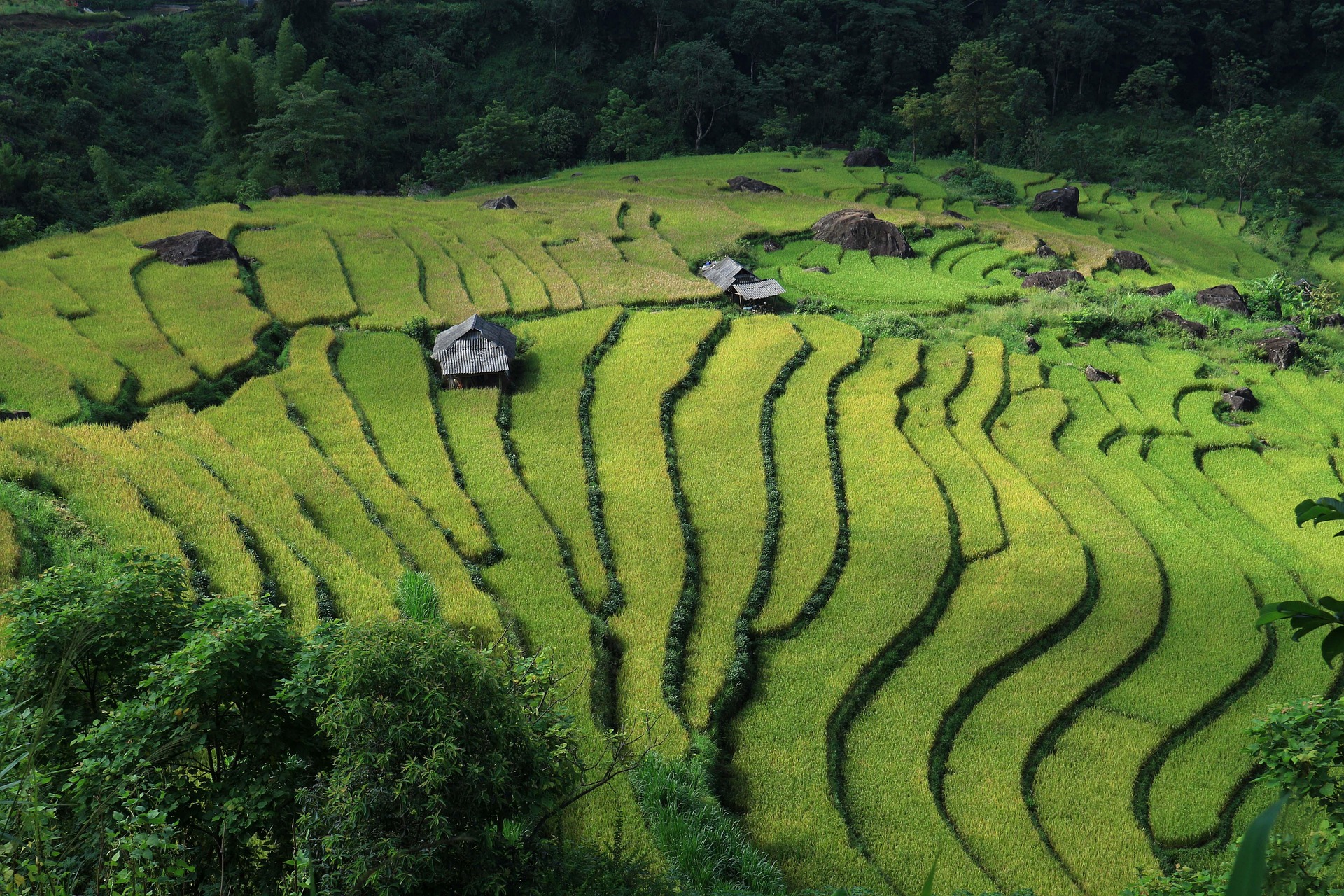
The dense, mist-shrouded forests of Vietnam's Annamite Mountains are not a mere collection of trees, but a living spiritual landscape. To their traditional inhabitants, the Katu people, this is a cultural text that must be carefully read and decoded. For centuries, the Katu have existed as the spiritual custodians of this region, navigating an environment animated by a complex pantheon of spirits, ancestors, and ghosts. This is not a wilderness untouched by humanity, but a landscape profoundly shaped by belief. This article explores how Katu animist cosmology has created an invisible architecture of sacred hills, spirit trees, and ancestral taboos. This intricate system, enforced by the fear of supernatural retribution, has functioned for generations as one of the world's most effective—and least understood—indigenous conservation systems.
Forests Conservation
Explore how Katu animism in Vietnam's Annamites creates a sacred forest map. This powerful indigenous conservation system is now under threat.

Editorial Team
January 14, 2026
1. The Invisible Architecture: Mapping the Spirit Hills
For the Katu, the forest is not a continuous, uniform entity. Their worldview divides the landscape into a complex map of "safe" zones for cultivation and "sacred/dangerous" zones that must be avoided. At the core of this map are mabuy , or "poisonous places"—areas infused with the dangerous power of malevolent spirits.
These zones act as invisible fences, regulating human activity far more effectively than any physical barrier.This spiritual map also includes areas polluted by mrieng —the highly dangerous, wandering souls of those who died "bad deaths" through violence, accident, or unnatural illness.
The fear of these lingering souls was a primary driver of the Katu's traditional semi-nomadic lifestyle. When a bad death occurred, entire villages would often be abandoned, the community relocating to escape the spiritual contamination.
This mobility was not random wandering but a spiritually-enforced system of land rotation, preventing the over-exploitation of any single area and contributing to the landscape mosaic of fallows and old-growth forest that is central to their conservation strategy.A compelling example of a permanent spirit zone is Konng Dhư Hill , a feared spirit hill that, despite its proximity to populated villages, remains covered in old-growth forest.
This remarkable preservation is a direct result of the villagers' belief that its master spirit, Grandfather Pangolin (Bhuöp Sonng Krohh) , is aggressive and monitors their behavior.
The spirit is said to punish not just trespasses on the hill itself, but also moral transgressions within the village, such as fighting or illicit sexual relations.Consequently, a strict set of prohibitions governs Konng Dhư Hill:
- 'Hunting is banned'.
- 'Clearing the forest for cultivation is forbidden'.
- 'Burning the forest is unthinkable'.
This spiritual fear functions as a powerful bulwark against resource exploitation, preserving a pocket of primary forest that would have otherwise been cleared. This feared hill stands in contrast to benevolent sacred mountains like Bol Legom , illustrating that the Katu spirit world is populated by entities with varied dispositions, each requiring a different form of human respect and interaction.
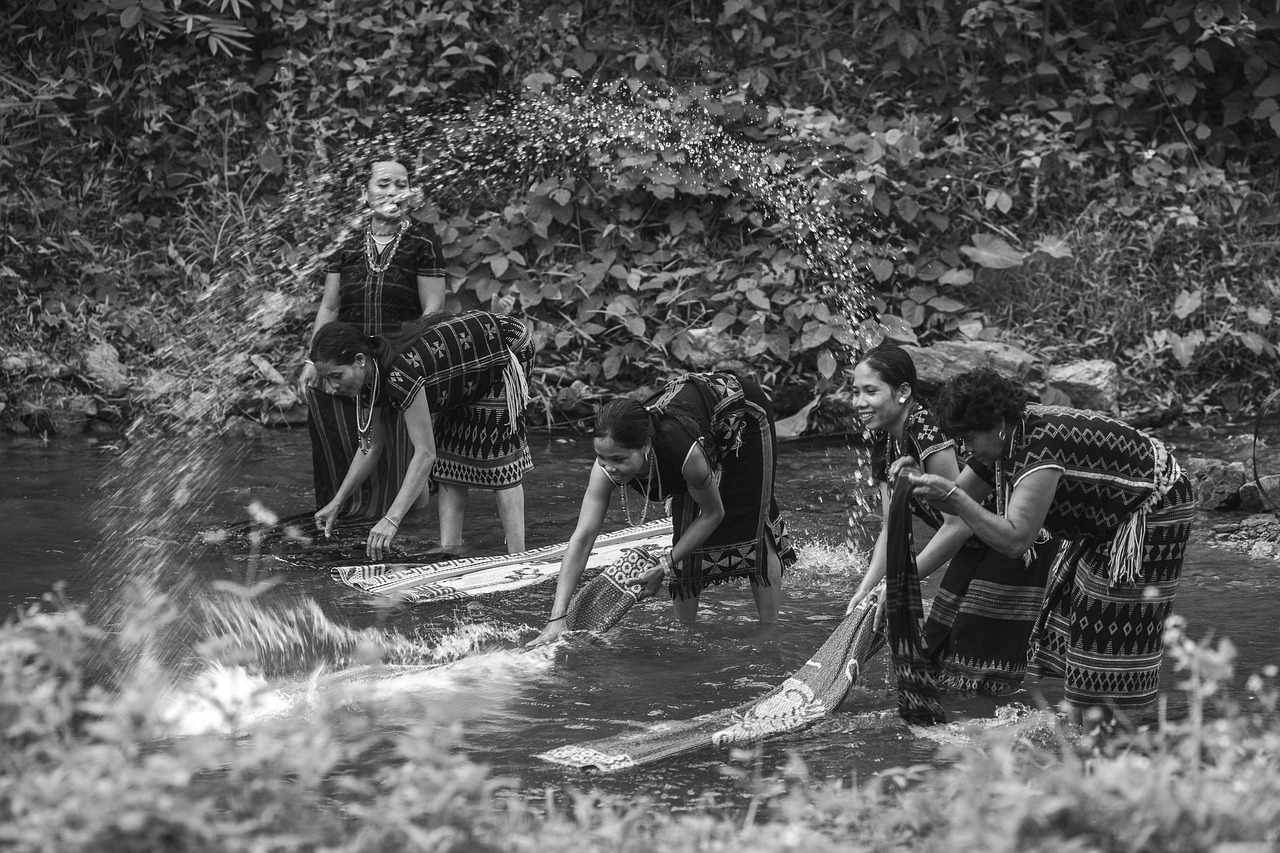
A multigenerational group of Katu villagers washing large woven textiles in a splashing river, surrounded by rocks and foliage in Vietnam.
Photo by
Editorial Team
2. The Oral Law: When Taboos Act as Ecosystem Software
If the physical landscape is the ecological "hardware" of the Annamites, then the Katu system of ancestral taboos ( dieng ) and oral narratives is its "software." These unwritten laws, passed down through stories, function as powerful conservation regulations. They are not enforced by rangers or courts, but by the threat of spiritual retribution—illness, madness, or death—believed to befall any transgressor.This is particularly evident in the concept of Spirit Trees .
In the Katu worldview, certain trees are not just wood and leaves; they are abodes for potent spirits. Harming such a tree is a direct attack on a powerful entity. The source texts identify several dangerous species, including the cheyel and, most lethally, the chölaar .
The distinction in their power is a measure of the communal weight of these taboos:
- Cutting a cheyel tree is believed to harm only the individual's family.
- Burning a chölaar tree in a village, however, is thought to be so catastrophic that it can cause the entire population to die.This belief elevates a single tree to a matter of collective survival, forging a taboo so powerful it safeguards not just an individual plant, but the spiritual and ecological integrity of the sacred groves themselves.
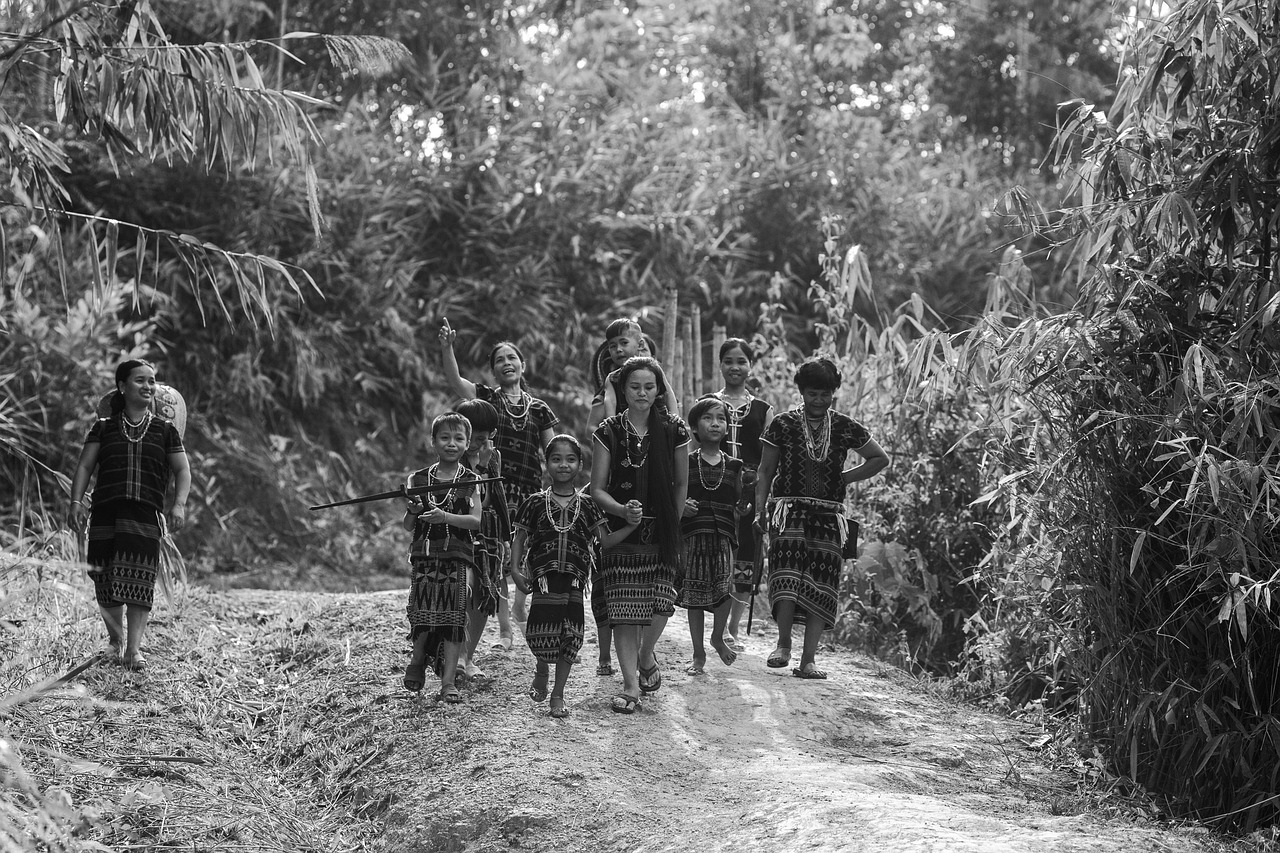
A multigenerational group of Katu villagers washing large woven textiles in a splashing river, surrounded by rocks and foliage in Vietnam.
Photo by
Editorial Team
3. The Living Archive: Biodiversity as a Manifestation of Belief
The tangible outcome of this spiritual architecture is the preservation of the region's high biodiversity. The dense, untouched canopies of the spirit hills and sacred groves are not merely biological phenomena; they are the physical manifestation of the Katu's spiritual pact with the landscape.
Scholarly analysis of the region suggests that the Central Annamitic forest is not a "virgin" wilderness but an anthropogenic, cultural landscape. Its exceptional biological richness has been significantly shaped and protected by these indigenous management regimes.
The "great forests," or old-growth areas, have been preserved precisely because they are considered the "abode of the gods." By prohibiting cultivation in these sacred zones, the Katu have historically created a landscape mosaic of cultivated plots, fallows in various stages of regeneration, and primary forest. This complex environment supports a richer diversity of fauna and flora than a uniform, single-use landscape ever could.
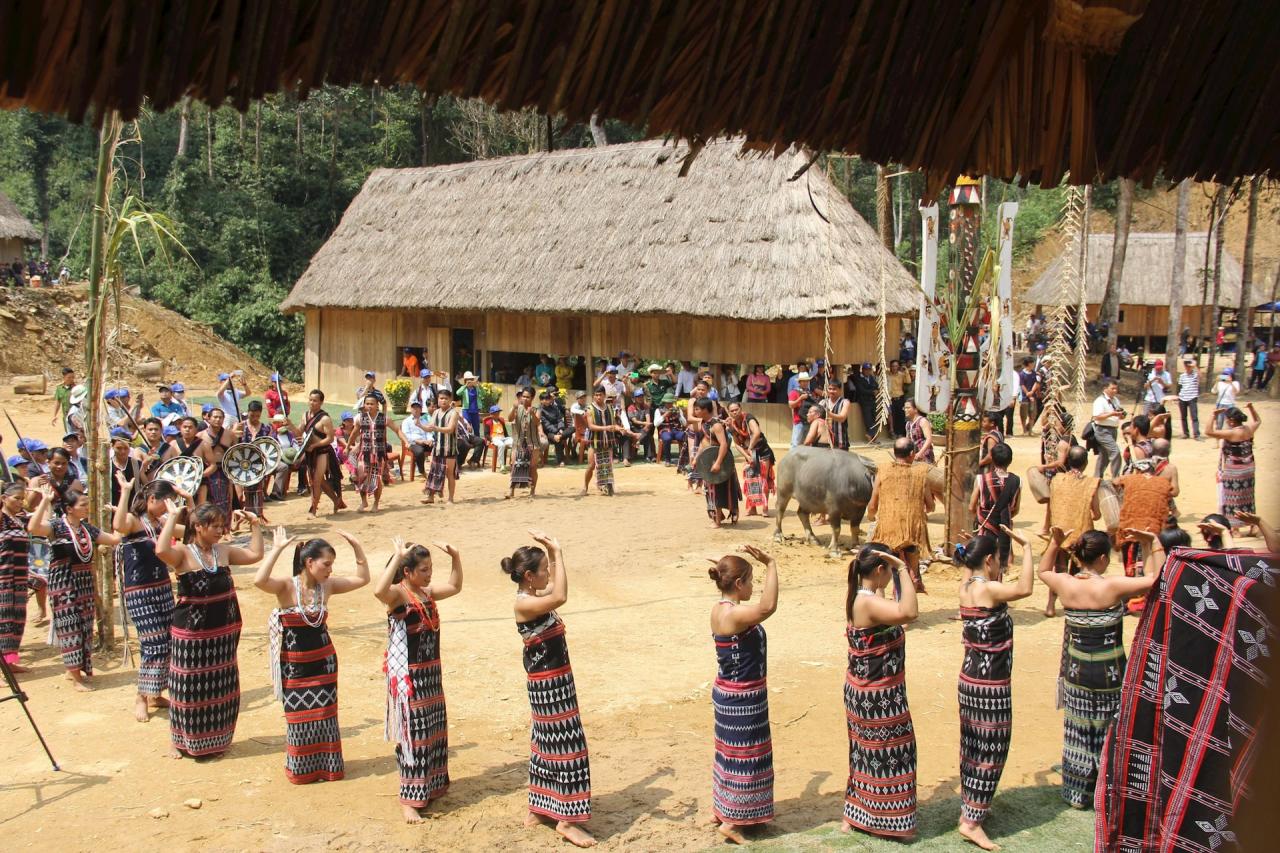
Rituals of the Central Highlands Dressed in traditional brocade, the Co Tu people perform the Tung Tung Da Da dance in Central Vietnam. Encircling a sacrificial buffalo and the communal Gươl house, this vibrant ceremony connects the villagers with their deities to celebrate the harvest.
Photo by
Editorial Team
4. The Glitch in the Map: Modernity's Commercial Gaze
This ancient spiritual-ecological system is now facing an existential threat. The disruptive impacts of modernization, government resettlement programs (sedentarization), and the encroachment of the market economy are rapidly eroding the Katu's traditional worldview.This clash can be understood as a conflict between two ways of seeing.
The elders possess a "spiritual eye," which reads the landscape for spirits, taboos, and ancestral warnings. In contrast, a "commercial eye" is emerging among the younger, less-believing generation and outside influences, which sees the forest not as a sentient entity but as a collection of exploitable resources.This conflict is illustrated by several profound changes:
- The government's push to replace sustainable swidden (slash-and-burn) agriculture with sedentary wet-rice farming dismantles a practice deeply intertwined with Katu ritual and mobility.
- Authority has shifted from the traditional village patriarch, whose power was rooted in understanding spiritual laws, to the state-appointed headman, whose responsibility is to implement government policy.
- The introduction of a cash economy has fundamentally altered the perception of value. One Katu man ironically remarked that it was only after seeing the government slogan "Forest is gold" that his people realized they could get money from selling timber.
5. Conclusion: The Fading Map
As the Katu's spiritual map fades from collective memory, the forest it protects becomes increasingly vulnerable. As the younger generation loses faith in the spirit world and as state policies overwrite traditional practices, the invisible spiritual boundaries that once regulated human activity are disappearing.
The taboos that prevented the clearing of Konng Dhư Hill and the cutting of the chölaar tree are losing their power. The concern is that the collapse of this spiritual architecture may precede the collapse of the physical ecosystem itself. When the forest is no longer seen as a geography of ghosts and gods, but merely as a commodity, the ancient bulwarks fall, leaving it exposed to a world that no longer knows how to read its invisible map.
References / Further Reading
-----
- Århem, N. (2009). IN THE SACRED FOREST: Landscape, Livelihood and Spirit Beliefs among the Katu of Vietnam . SANS Papers in Social Anthropology.
- Århem, N. "The Katu Spirit Landscape: Forests, Ecology, and Cosmology in the Central Annamites." in Sacred Forests of Asia: Spiritual Ecology and the Politics of Nature Conservation. Routledge
- Bayrak, M. (2010). Changing Indigenous Cultures through Forest Management - Case Study: Co Tu People in Central Vietnam .
POST
POST
POST

